
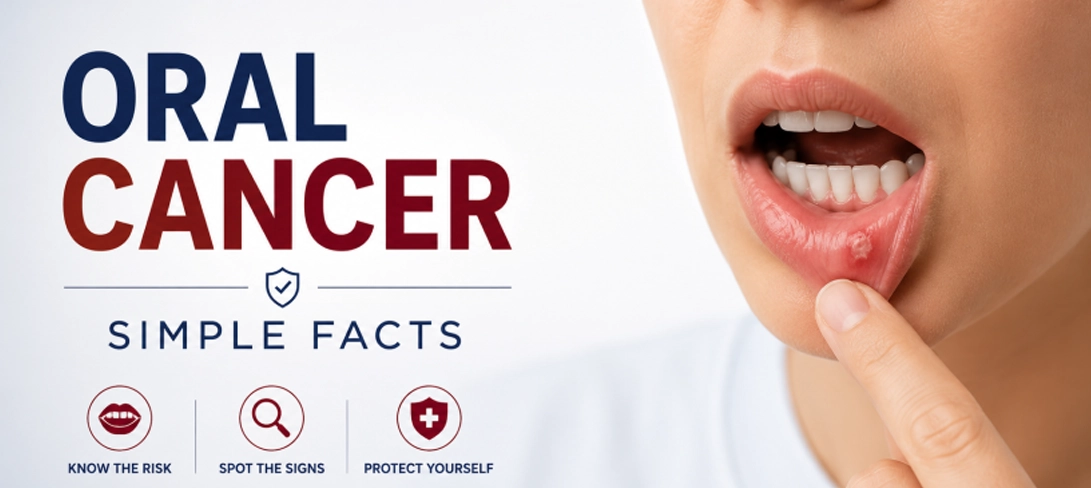
Worried About Oral Cancer? See Your Dentist
Oral cancer can affect the lips, tongue, cheeks, throat, and other areas of the mouth. Early detection is important, which is why regular dental visits play an important role in maintaining your overall oral health.
If you notice unusual changes in your mouth that do not go away, scheduling a dental examination is an important first step.
Common Signs to Watch For
Some changes that should be evaluated by a dental professional include:
A sore in the mouth that does not heal
Red or white patches inside the mouth
A lump or thickened area
Unexplained bleeding
Persistent mouth or throat discomfort
Difficulty chewing or swallowing
Changes in your voice
Numbness in the mouth or lips
Having one of these symptoms does not necessarily mean you have oral cancer. However, persistent or unusual changes should not be ignored.
How Can Your Dentist Help?
During a routine dental visit, your dentist examines more than just your teeth. An oral examination may also include checking the tissues of your mouth for unusual changes.
If an area appears concerning, your dentist can recommend the appropriate next steps or refer you to a specialist for further evaluation.
Regular dental checkups can help identify potential concerns early, even when you are not experiencing pain or obvious symptoms.
When Should You See a Dentist?
If you notice a sore, lump, patch, or other unusual change in your mouth that persists, it is important to schedule an evaluation rather than waiting for it to go away on its own.
You should also continue attending regular dental checkups, as many oral health concerns may not cause noticeable symptoms in their early stages.
Oral Health Care in South Bend, IN
If you are concerned about changes in your mouth or want to maintain your oral health through regular dental care, the team at Michiana Family Dental is here to help.
Visit Michiana Family Dental at 3575 Portage Ave, Suite A, South Bend, IN 46628, or call (574) 349-2073 to schedule an appointment.
Taking action early can make an important difference when it comes to protecting your oral health.