
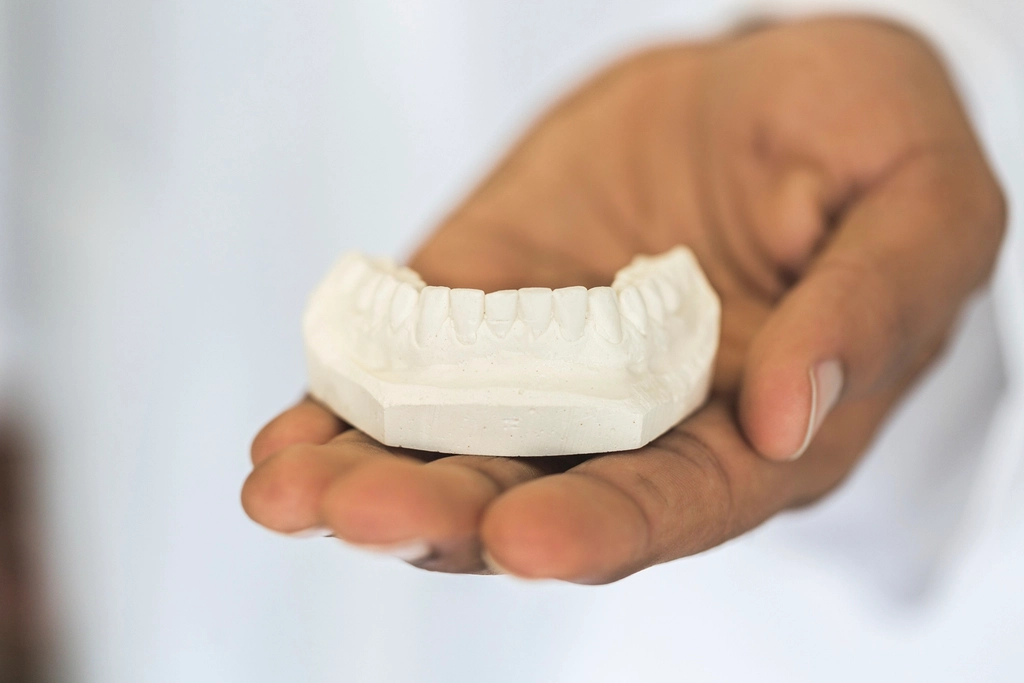
Losing a tooth affects more than your smile. Gaps can make chewing harder, change the way you speak, and allow neighboring teeth to drift out of position over time. The good news is that modern dentistry offers several reliable ways to replace missing teeth. The three most common are dental implants, bridges, and dentures, and each has its own strengths. Choosing the right tooth replacement starts with understanding how each option works.
Dental implants
An implant is a small titanium post placed in the jawbone, where it fuses with the bone and acts like a new tooth root. Your dentist then attaches a crown on top. Because bone anchors them firmly, they feel and function very much like natural teeth.
- Pros: Very stable, can last for decades with good care, and help preserve jawbone that would otherwise shrink after tooth loss.
- Considerations: Treatment takes a few months from start to finish, requires enough healthy bone (or a bone graft), and usually has a higher upfront cost.
Dental bridges
A bridge fills a gap by attaching a replacement tooth to crowns placed on the healthy teeth on either side. It is a fixed restoration, so you do not take it out.
- Pros: Usually completed in two or three visits, looks natural, and often costs less than an implant up front.
- Considerations: Your dentist needs to reshape the neighboring teeth to support the crowns, and you will need special floss threaders or a water flosser to clean underneath.
Dentures
Dentures are removable replacements for several teeth (partial dentures) or a full arch (complete dentures). You can also pair them with implants for extra stability, often called implant-supported or “snap-in” dentures.
- Pros: The most affordable way to replace many teeth at once, and a lab can make them relatively quickly.
- Considerations: Traditional dentures can shift while eating or speaking, need adjustments as the jaw changes, and you need to take them out and clean them daily.
How to decide
The right choice depends on how many teeth are missing, the health of your gums and jawbone, your budget, and how you feel about removable versus fixed options. Some questions worth thinking about:
- Are the teeth next to the gap healthy, or do they already need crowns?
- How important is it to you that the replacement never comes out?
- Do you have any health conditions that might affect healing?
Learn more about tooth replacement
Every tooth replacement option has trade-offs, and the best choice depends on your health and goals. If you are leaning toward implants, read our guide to the phases of the dental implant procedure. The American Dental Association also offers helpful patient information on MouthHealthy.org.
Let us help you weigh your options
There is no one-size-fits-all answer. At Michiana Family Dental, we start with a thorough exam and X-rays, then walk you through the options that make sense for your mouth, including timelines and costs. If you have been living with a gap, schedule a consultation and let us help you get back to chewing and smiling with confidence.