
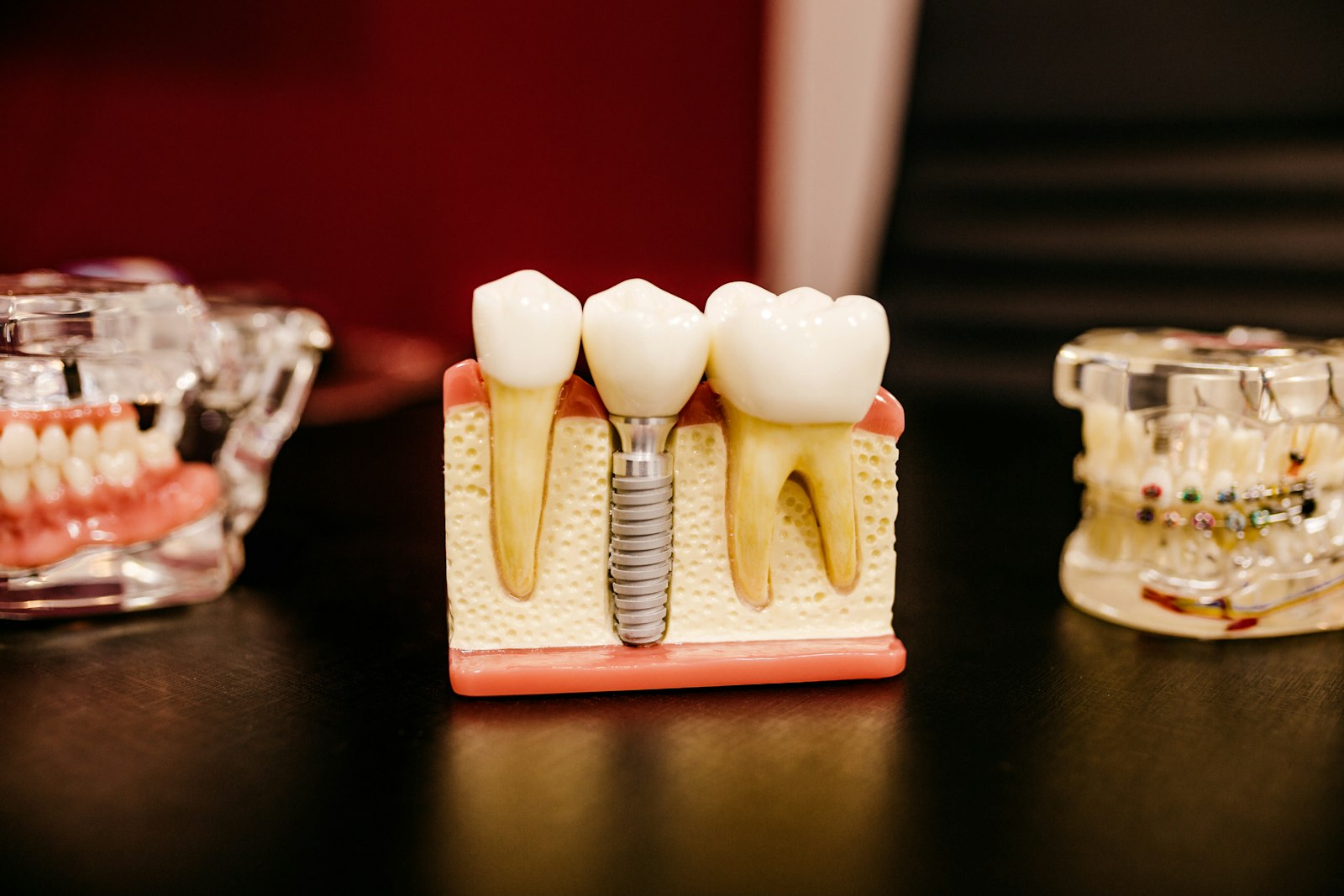
Dental implants need a solid foundation of jawbone to stay secure for years. After you lose a tooth, the bone that once supported it gradually shrinks. If there is not enough bone left, a dental bone graft can rebuild the area so your dentist can place an implant successfully.
Why bone loss happens
Tooth roots stimulate the jawbone every time you chew. As a result, without that stimulation, the body slowly resorbs the bone. In addition, bone loss can also result from gum disease, infection, injury, or long-term denture wear. In general, the longer a tooth is missing, the more bone you may lose.
What is a dental bone graft?
A bone graft adds bone or bone-like material where the area needs support. Over a few months, your body uses the graft as a scaffold to grow new bone. For example, graft materials can come from your own body, a donor source, animal sources, or synthetic materials. Each is safe and widely used, and we will explain which is best for your situation.
Common types of grafts
- Socket preservation: Placed right after an extraction to keep bone from collapsing.
- Ridge augmentation: Rebuilds the width or height of a jaw ridge that has shrunk.
- Sinus lift: Adds bone under the sinus in the upper back jaw, where bone is often thin.
What to expect
Your dentist uses local anesthetic for bone grafting, and many grafts are simple, quick procedures. Mild swelling and soreness for a few days are normal. Healing usually takes three to six months before implant placement. However, sometimes your dentist can do the graft and implant at the same visit.
Recovery tips
- Above all, follow your post-op instructions and take medications as directed.
- Eat soft foods and chew on the other side.
- Avoid smoking, which slows healing and can cause the graft to fail.
- Do not press on the area with your tongue or fingers.
- Call if you have increasing pain, swelling, or fever after a few days.
The American Academy of Periodontology explains bone grafting further at perio.org.
Dental bone graft FAQs
Is a dental bone graft painful?
Overall, most patients report mild soreness for a few days after a dental bone graft, manageable with over-the-counter pain relievers.
How long after a dental bone graft can I get an implant?
Healing usually takes three to six months. In some cases, though, your dentist can place the implant at the same visit as the dental bone graft.
Implant planning near Niles and South Bend
Learn more about dental implants or schedule a consultation at Michiana Family Dental, 3575 Portage Ave, Suite A, South Bend, IN. We welcome patients from Niles, Buchanan, Berrien Springs, and the South Bend area.